Docquity: How Docquity Is Bridging Southeast Asia’s Healthcare Divide | Players by Genesia
It’s been nine years since Genesia Ventures made its first seed investment in Docquity in 2017 — a company founded by two Indian entrepreneurs we met in Jakarta.
Today, three out of four doctors in Southeast Asia use the platform. With a network of over 510,000 medical experts across seven countries — Indonesia, Malaysia, Philippines, Thailand, Vietnam, Singapore, and Taiwan — and partnerships with more than 250 medical associations, Docquity has become the largest medical expert platform in Southeast Asia.
The problem they set out to solve was a real one: the healthcare knowledge gap across the region. Medical experts in the region’s rural areas should have the same access to up-to-date clinical information as specialists in major cities, and be able to earn the accredited CME credits required to maintain their licenses — which vary by country but are often difficult to access outside major hubs. What they built wasn’t just an app; it was a more equitable distribution of medical knowledge.
That work is now reaching Japan in earnest. In June 2025, Docquity announced a partnership with Hipocra — an online medical platform operated by exMedio with over 74,000 registered physician members — and launched the AI clinical assistant “Dx.”
But numbers and milestones only tell part of the story of who Docquity really is. What drives them is a deeply human mission and a refreshingly unconventional spirit.
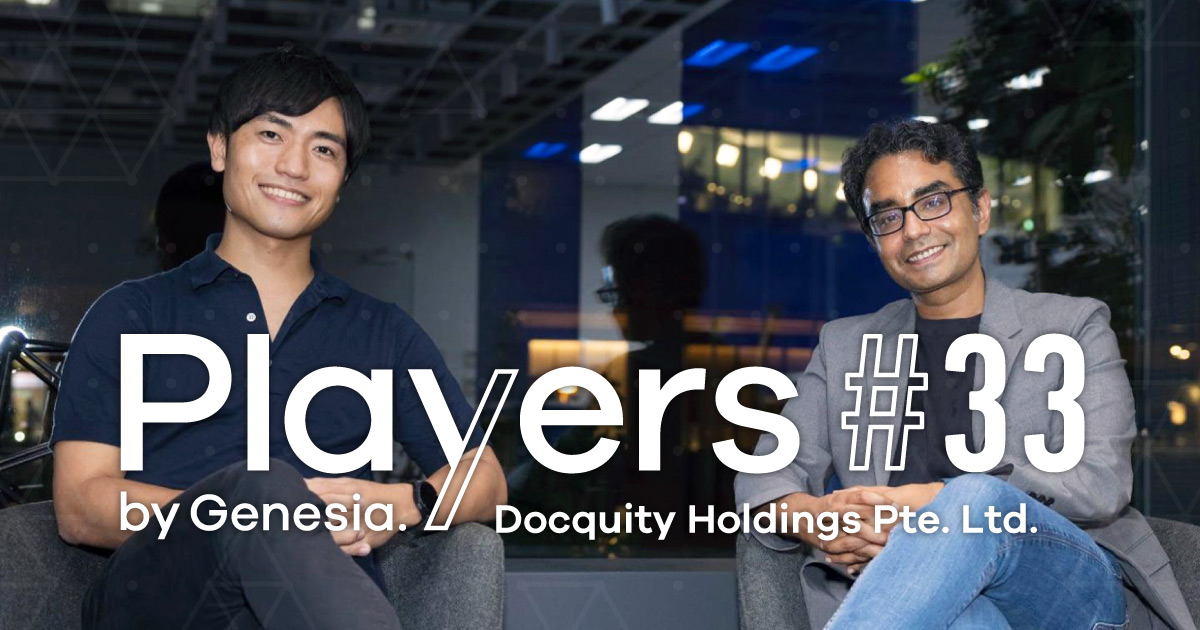
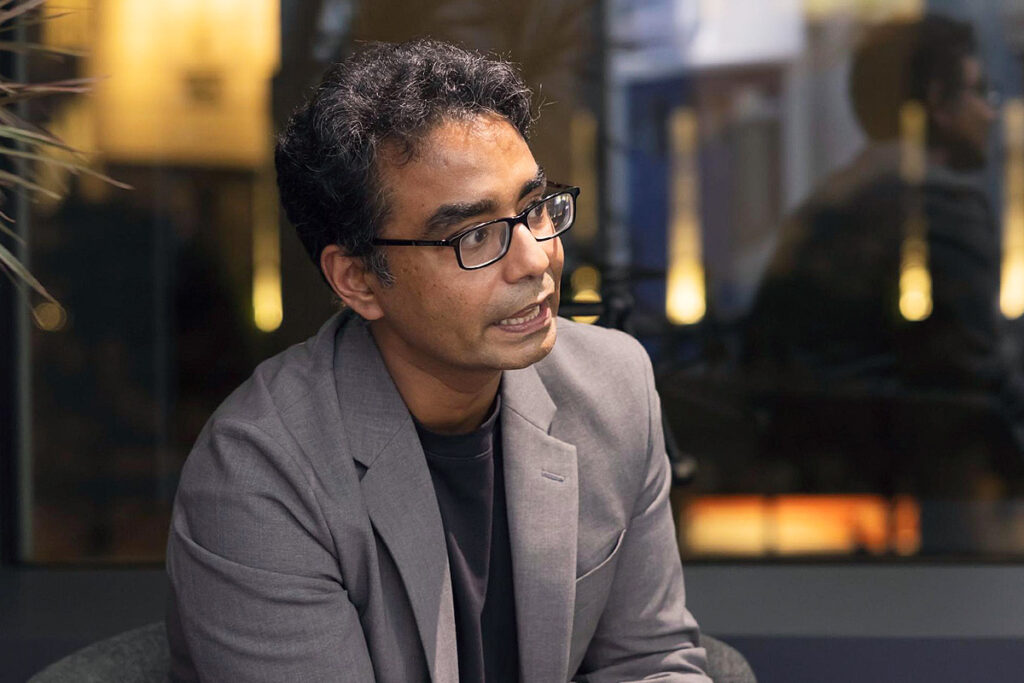
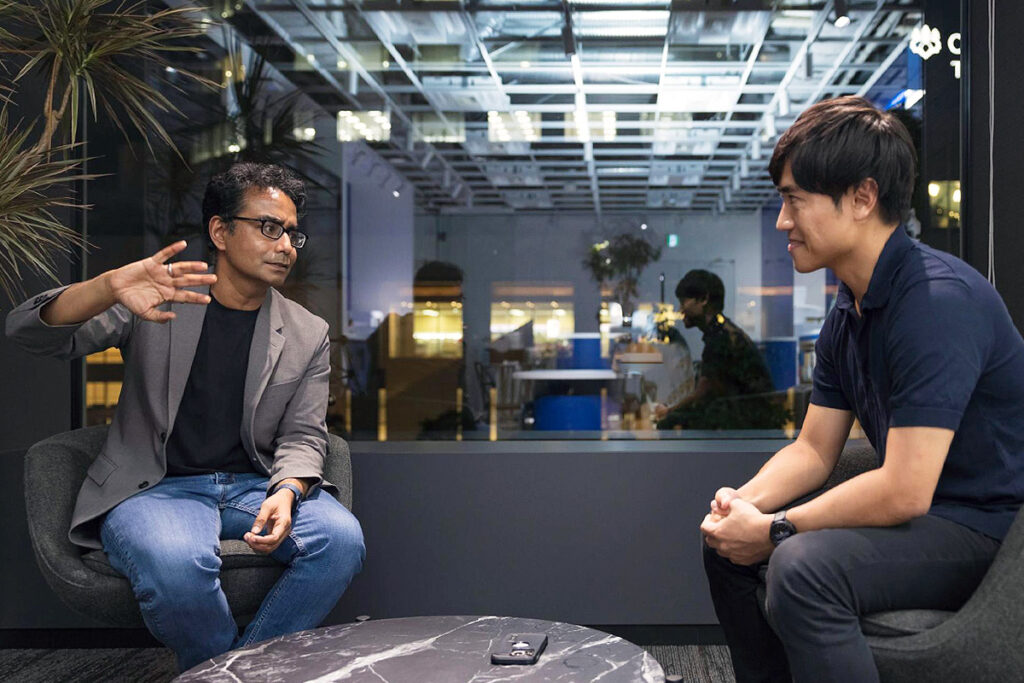
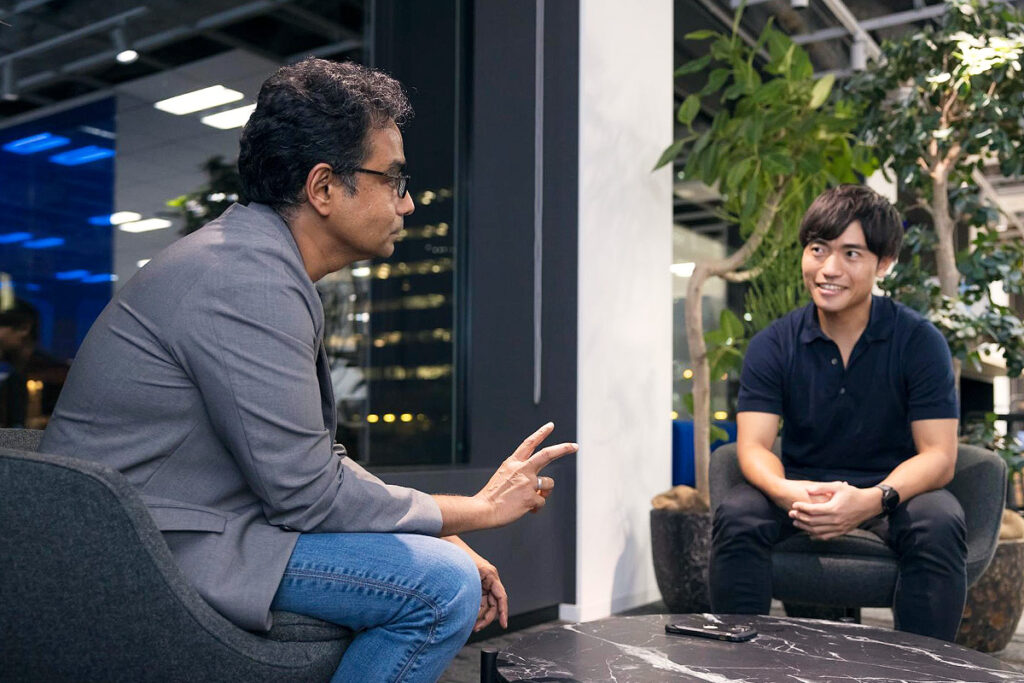
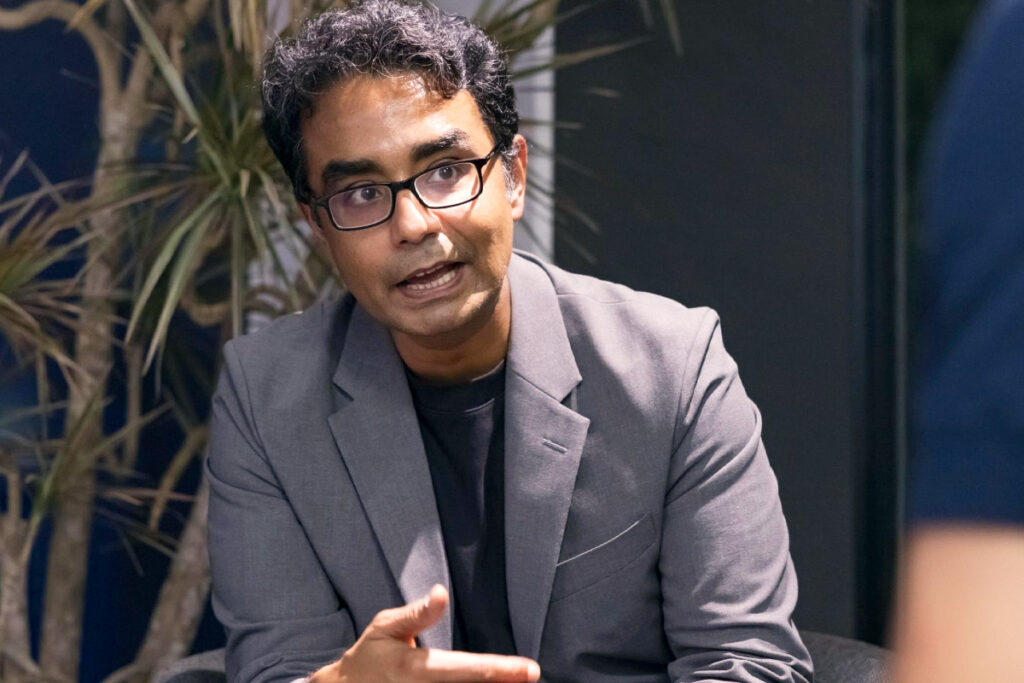
Here is a conversation between CEO Indranil Roychowdhury and Yuto Kono, Principal of Genesia Ventures, who has worked alongside the company for nine years.
Growing up obsessed with music
Let’s start at the beginning. What were you like as a kid?
I grew up in Delhi and was completely absorbed in music. At one point I seriously considered running away from home to play in a band. School took a back seat, and I clashed with my fairly conservative parents quite a bit. I still clearly remember getting into a huge argument with my father when Deep Purple came to Delhi — I desperately wanted to go to that concert. By high school I had my own band and was performing as guitarist and vocalist.
How did you go from music to business?
The turning point was meeting Shivani, who later became my wife. Something clicked — I realized that if I wanted to be with her, I needed to become someone worth taking seriously. So I got my engineering degree and went on to do an MBA. That’s where I met my co-founder Amit.
A partnership built on heavy metal
And that’s where you and Amit connected?
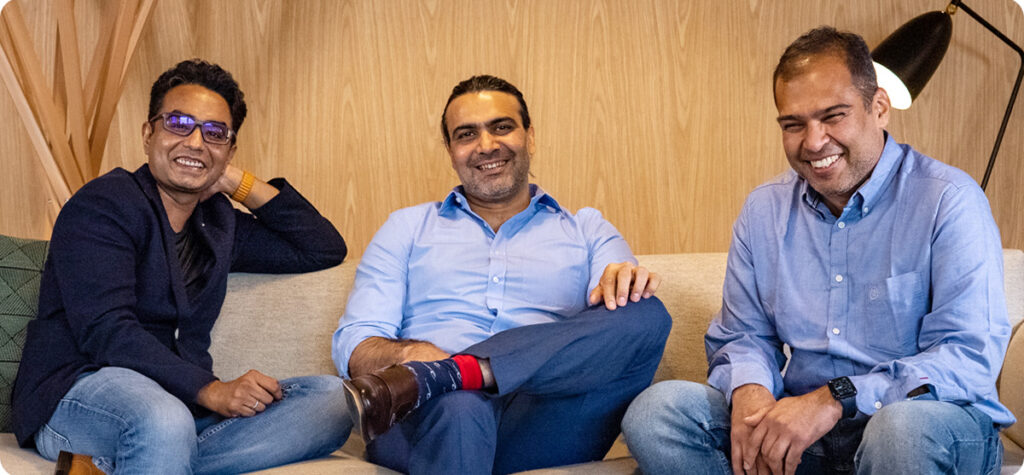
At a party, I found out he was just as fanatical about music as I was. Iron Maiden, Metallica, Megadeth — our taste matched completely. I thought, “this is the guy,” and within a few days I moved into his place as a roommate. Music brought us together, whisky deepened the friendship, and eventually we started a company. That’s really where it all began.
You’d actually founded a company with him before Docquity as well.
In 2011 we launched NAVAM, which let people record a voice message over the phone and have it post directly to Facebook. But then Facebook changed its policies and the business model collapsed. What we took away from that was a clear lesson: don’t build on someone else’s platform. Own your platform, and build partnerships on top of it. That principle became the foundation of Docquity.
Sitting on stairs for eight hours to meet doctors
You’re both from India, but you launched Docquity in Indonesia. Why Southeast Asia?
It was less a deliberate strategy and more a series of coincidences. One thing we were absolutely committed to from the start was verifying that our users were actually licensed medical experts. To do that, we needed to work with medical associations — and in India, every door we knocked on was closed. In Indonesia, the medical association was open to hearing us out. Then at a regional medical association conference in Thailand in 2016, the Indonesian association shared our case as a positive example, and trust started spreading through word of mouth from there.
Getting that level of access in a foreign country couldn’t have been easy.
In emerging markets, there’s no shortcut to building trust in person. Amit used to sit on the staircase outside the Indonesian medical association’s old office from 10 in the morning until 6 in the evening. He’d approach every doctor who walked in or out and build a relationship one by one. No matter how far technology advances, I still believe that in the end, everything comes down to that kind of trust — built face to face, person to person.
That relentless commitment to showing up is ultimately what built the foundation for a strong doctor community on the platform. I’ve always admired the Docquity team’s extraordinary drive for results. This story reinforces my belief that even the most successful digital platforms are ultimately built on this kind of “analog” trust, earned one person at a time.
“I thought it was over” — the hardest night in ten years
Looking back over a decade, what was the hardest moment for you?
It was a night in 2018, involving a serious dispute with an investor. We’d already signed a term sheet, but just before the funds were supposed to arrive, they unilaterally changed the terms — clearly timing it to when they knew we were almost out of cash. This came just a few weeks before payroll. I genuinely thought it was the end.
That was truly an extreme situation. While it sent shockwaves through our team as well, our belief in Docquity’s business and team remained steadfast. I vividly remember us brainstorming every possible way we could step in to support you.
That’s exactly when Genesia and another VC made the immediate decision to provide additional funding — and it saved us. Without that, there would be no Docquity today.
There’s another decision from that period I haven’t forgotten. When we brought in Abhishek, who is now our COO, we couldn’t even guarantee his annual salary at the time. But I went to Genesia and asked for an additional $100K, because I was absolutely convinced we needed him to strengthen the team. He’s been an anchor for Amit and me ever since — someone who keeps our instinct to push forward in check, and who always asks the hardest questions. He’s been an invaluable partner.
COVID-19: rapid growth, then a sharp correction
The pandemic had a real impact on the business. Demand for our solutions grew significantly, but you also ran into organizational challenges.
It was an intense period of change. Business grew rapidly, but as the organization expanded quickly and shifted to remote work, a real distance opened up between team members that was hard to bridge. Then when lockdowns ended, digital investment dropped sharply in reaction, and revenue took a hit.
That said, going through that difficult period is what pushed us to move away from a single advertising-based model toward our current data and insights business. The products and business foundation we have today are, I think, a result of working through that difficult stretch.
The way Docquity sensed shifts in the market quickly and rebuilt both the product and business model in response — that capacity for decisive action, even when it’s painful, is one of the team’s real strengths.
Expanding into Japan and veterinary medicine
One significant development in Japan has been the partnership with A’alda in veterinary medicine.
Yes. We launched a platform combining our AI technology with A’alda’s clinical expertise in September 2025. The system has been trained on over 28 million medical papers, and it achieved a 95% accuracy rate on Japan’s national veterinary licensing exam, so we’re confident in the quality.
Are you starting to see real adoption in the field?
Within the first three months, the cumulative number of questions asked exceeded 110,000 — which was genuinely surprising. The sense we’re getting is that it’s being accepted not just as a search tool but as a practical partner in daily clinical work. We’ve also built in a feature for sharing anonymized clinical insights, which helps raise the knowledge level across the profession as a whole. Beyond Japan, we’re also pushing into the Middle East, with the goal of building something useful globally.
“For Doctors” — the constant, and Docquity 3.0
Finally, where is Docquity headed from here?
We want to strengthen our position in Southeast Asia while building out the Japan and Middle East businesses more deliberately. Our core principle — being a company that exists for doctors — isn’t going to change.
We’re currently developing what we’re calling Docquity 3.0, which integrates three distinct values: learning, searching, and daily clinical utility. Going forward, we want to start from what genuinely matters to doctors, and have a pharmaceutical company engagement layer on top of that — which is how it should have been structured all along.
It’s been a genuine privilege to be part of Docquity’s mission to address healthcare inequality across Asia. I’m looking forward to seeing what the next ten years bring. Thank you for today.
Thank you. Talking through all of this brought back a lot of memories from those early days. I’m glad we’ve been able to make this journey alongside Genesia. We came through some very difficult moments — and that’s exactly why we’re now in a position where we can see a real path forward.
Note: This information is current as of April 6, 2026.