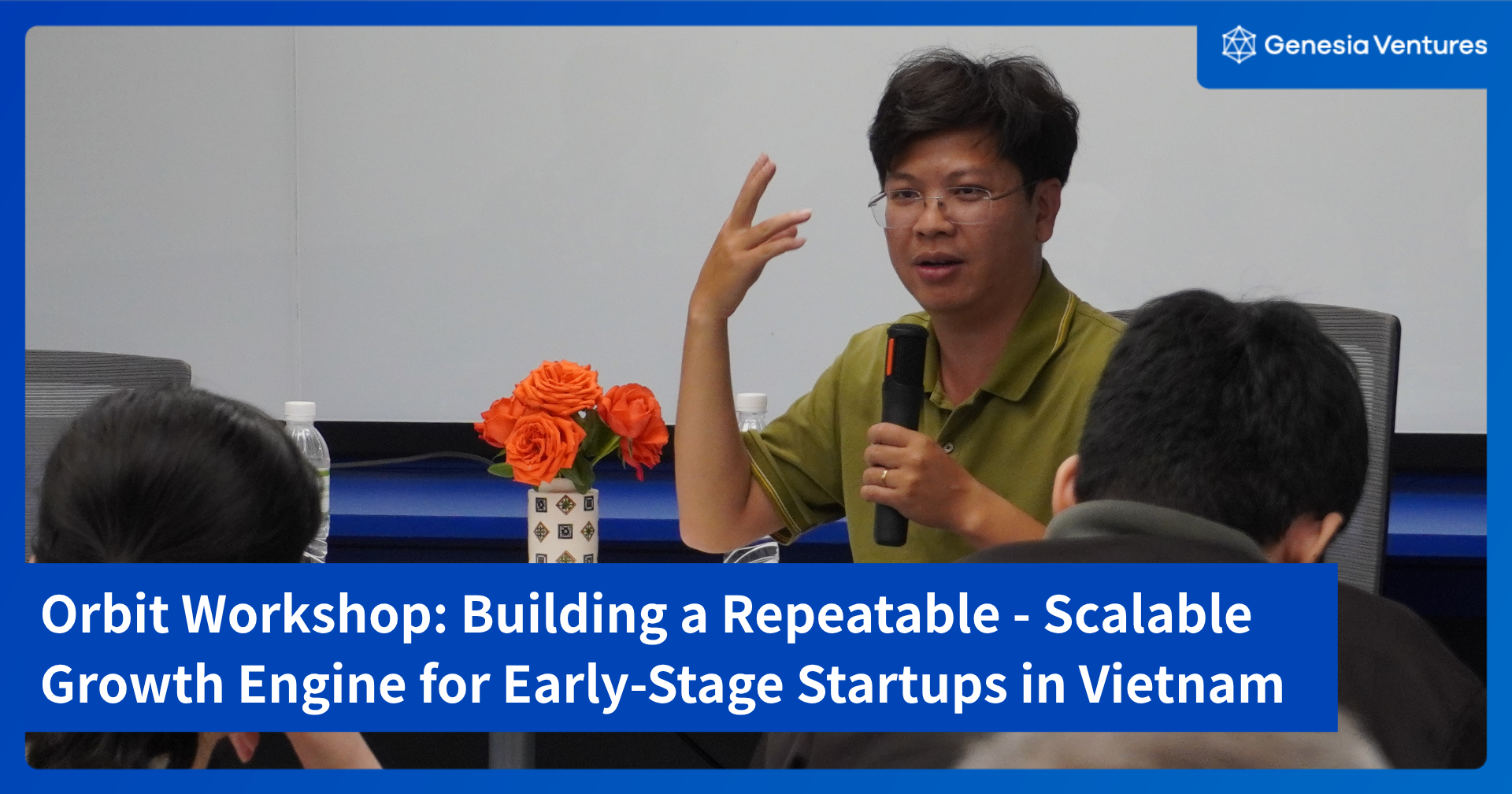
Orbit Workshop: Navigate Growth through Crisis
This report is part of our Orbit Workshop series, where we spotlight key lessons from founders in our network.
On September 26, 2025, we hosted Orbit Workshop: Navigate Growth through Crisis at Genesia Orbit HCMC, moderated by Hoang Thi Kim Dzung (Zun), Country Director of Genesia Ventures Vietnam, with guest speaker Nguyen Thanh Trung, Co-founder & CEO of Sky Mavis (Axie Infinity).
The discussion explored how founders can navigate uncertainty, rebuild trust, and turn crises into opportunities for sustainable growth.
- Moderator: Hoang Thi Kim Dzung, Country Director of Vietnam, Genesia Ventures
- Editor: Vo Thanh Truc, Operation and Community Manager, Genesia Ventures
Overcoming Crisis – Rebuilding Trust and Sustainable Growth
Zun: Trung, you’ve navigated one of the most challenging periods for a Vietnamese startup – from Axie Infinity’s global success to the 2022 attack crisis. Looking back, how would you define “overcoming crisis”?
Trung: For me, crisis goes beyond finance or operations – it’s a test for the team to reveal who truly believes in our mission and who’s willing to stay and overcome challenges together. When things are going well, optimism comes easily; but when we face our darkest moments, our reactions reveal our true character. I firmly believe that if the team remains strong and the product still delivers value, we can always rebuild.

Keeping the Team Motivated During a Crisis
Zun: During that period, team morale must have been greatly affected. How did you prevent people from falling apart?
Trung: The first key is transparency. I never hide information—people need to know what’s really happening, how much runway we have left, and our next steps. When there’s transparency, team members feel they’re part of the solution, not just passively waiting for announcements.
The second is regular communication. I meet with small groups and truly listen to their concerns. When employees feel heard, their fears diminish. Finally, we focus on what we can control—the product, users, and community. When people feel they’re still creating genuine value, their motivation gradually returns.
Community Trust – The Greatest Asset
Zun: During that period, team morale must have been greatly affected. How did you maintain team cohesion during such challenging times?
Trung: The first key is transparency. I never hide information—people need to know the reality of our situation, including our remaining runway and our strategic plans. When transparency exists, team members feel they’re part of the solution rather than passive recipients of announcements.
The second is regular communication. I meet with small groups and truly listen to their concerns. When employees feel heard, their anxieties diminish. Finally, we focus on what we can control—the product, users, and community. When people continue creating meaningful value, their motivation naturally rebuilds.

Leadership Mindset in Times of Crisis
Zun: As a leader, what is the hardest part about leading when everything seems to be falling apart?
Trung: The hardest part is maintaining faith when you’re scared. There are sleepless nights when I wonder if I can save the company. Yet the next morning, I still must walk into the office and address my team with confidence. Leadership isn’t about being strong all the time—it’s about standing firm so others can rely on you. I’ve learned that during a crisis, calmness and honesty matter more than any strategy. If you’re not genuine, your team will sense it immediately.

Organizational Culture – The Foundation of Resilience
Zun: Many startups talk about “organizational culture,” but in reality, not everyone can maintain it when facing a crisis. How do you view culture’s role in resilience?
Trung: For me, culture is what keeps the team together when everything else collapses. It’s not just a slogan but how people behave daily—supporting colleagues, sharing information, and admitting mistakes.
During our crisis, the culture of “candor – responsibility – perseverance” prevented us from falling apart. When everyone shares common values, you don’t need fear-based management. A strong culture builds a resilient organization.
Future Direction – Building Sustainable Products, Not Just Following Trends
Zun: Looking back, what key lessons have you learned for Sky Mavis’s future journey?
Trung: I’ve come to understand that technology and “trends” are merely surface-level. What truly matters is creating sustainable value for users. If a product doesn’t deliver real benefits, it will quickly disappear regardless of the hype surrounding it. Sky Mavis has shifted focus from solely Axie Infinity to developing a more accessible Web3 infrastructure that enables other developers to create games and products. The most significant lesson I’ve learned is that sustainable growth comes not from increased speed, but from deeper understanding—of your team, your users, and your fundamental purpose.

Conclusion – Strong Faith, Sustainable Organization
Trung Nguyen’s journey illustrates a powerful truth: crisis serves as a test, not an endpoint. During challenging times, fundamental elements like transparency, trust, and strong organizational culture enable startups to remain resilient and continue growing. This embodies the core mission of Orbit Workshop—empowering founders to transform challenges into catalysts for breakthrough growth and innovation.
Note: This report reflects information as of October 22, 2025.