Orbit Workshop: IPO Playbook for Startups in Vietnam
This report is part of our Orbit Workshop series, where we spotlight key insights from leading investors and operators across our network.
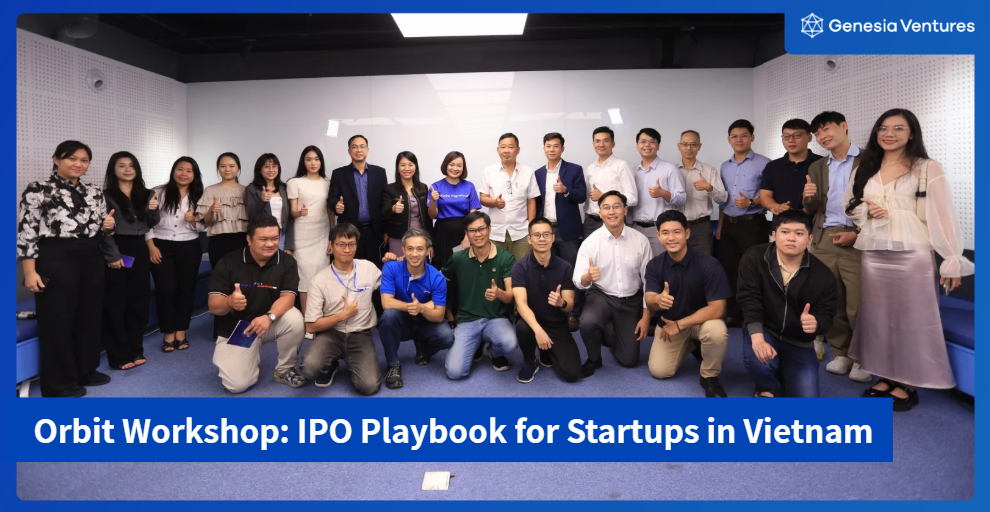
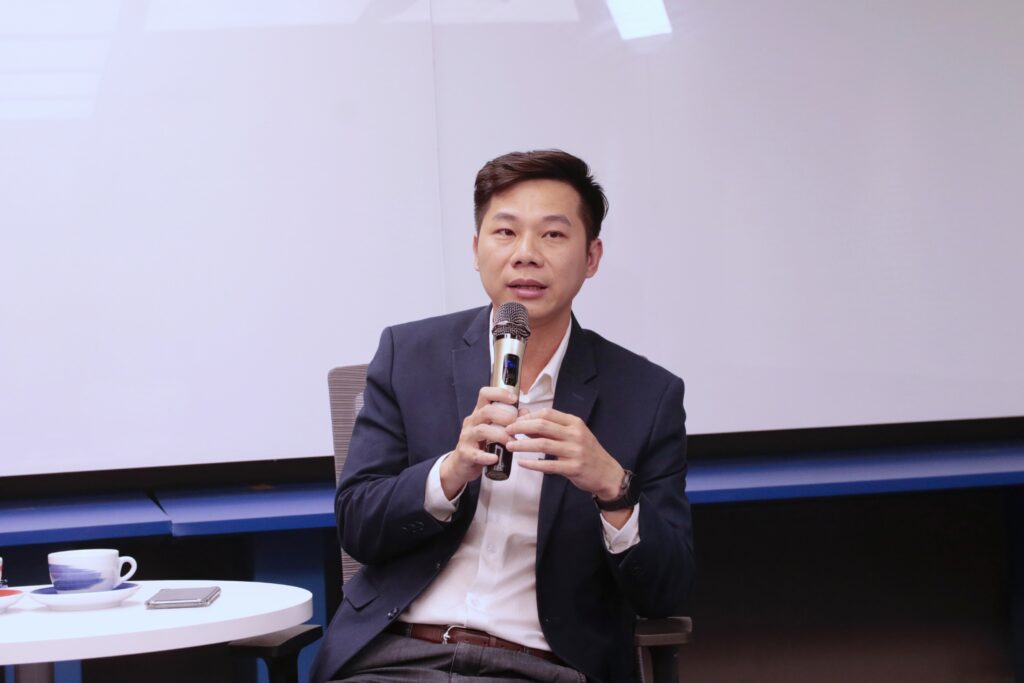
On October 31, 2025, we hosted Orbit Workshop: IPO Playbook for Startups in Vietnam at Genesia Orbit HCMC, moderated by Hoang Thi Kim Dzung (Zun), Country Director of Genesia Ventures Vietnam, with guest speaker Duy Le, Deputy Managing Director at VinaCapital Group.
The session explored what it truly takes for startups to move from growth to going public, offering founders a practical roadmap on strategic readiness, financial preparation, governance, and capital market dynamics.
- Moderator: Hoang Thi Kim Dzung, Country Director of Vietnam, Genesia Ventures
- Editor: Vo Thanh Truc, Operation and Community Manager, Genesia Ventures
Is IPO the finish line or just the beginning?
Zun: Many founders say that their ultimate goal is to take their company public. From your perspective, should IPO really be viewed as the end goal? Or is it simply a stepping stone toward something bigger?
Duy Le: In my view, IPO is not the finish line — it’s the beginning of an entirely new chapter for the company. Once you’re listed, everything changes: legal compliance becomes heavier, information disclosure becomes routine, investor relations and PR take significant time, and the company must transition from a compact team of co-founders to a structured public organization. The demands are greater, expectations are higher. So to me, IPO is the moment a company evolves from “small and private” to “public and accountable,” not the moment the journey ends.
Where should Vietnamese startups IPO — at home or abroad?
Zun: If IPO is just a tool, not the final destination, how should founders think about choosing between listing in Vietnam or pursuing an overseas IPO? What are the key pros and cons?
Duy Le: Both paths come with their own benefits and challenges. Over the past decade, even some unicorns have wantedto list overseas, but in reality, no Vietnamese startup has truly achieved a full international IPO. Even VinFast’s case on NASDAQ was more of an expert listing, not a capital-raising IPO, meaning liquidity was low and it didn’t bring new capital to the company.
On the other hand, listing domestically means we understand the laws, the regulatory environment, and the investor community understands our business better. The downside is that Vietnam’s current regulations are strict for startups — HOSE requires 2 consecutive years of profit, ROE > 5%, minimum charter capital of 300 billion VND, and a wide shareholder base. That’s why many companies turn to UPCoM as a more accessible stepping stone.
Why have so few Vietnamese tech companies gone public in the last 10 years?
Zun: Looking back 10 years, there have been very few Vietnamese tech IPOs. Is it because our capital market isn’t mature enough, or because startups themselves are not ready?
Duy Le: It’s a combination of both. Regulations have historically been too rigid for startups, and many Vietnamese tech companies haven’t yet built sustainable, long-term business models. To conduct an IPO worth the effort, a startup should ideally reach a market cap of at least $500–600 million. Preparing for IPO takes 2–3 years and involves huge costs for lawyers, consultants, corporate restructuring, and roadshows.
But the deciding factor is liquidity:
If you go public without anchor investors — large institutions willing to buy the majority of your offering — the stock will not trade, and the IPO fails in practice. Without liquidity, listing is meaningless.

Is Vietnam entering a new capital market era?
Zun: Vietnam’s market seems more active than ever — new policies, new programs, even discussions about a startup board. Do you think the IPO playbook is changing?
Duy Le: I think we’re entering a very promising phase. Resolution 68 introduces major tax incentives, R&D deductions, and establishes international financial centers in Ho Chi Minh City and Da Nang. Liquidity in the Vietnamese stock market is now the highest in Southeast Asia — $1–2 billion traded daily. Both domestic and international investors are eager.
But no matter how good the policies are, the key remains:
Only companies with strong fundamentals, transparency, and good governance will attract real capital.
What can Vietnam learn from Japan, India, and Indonesia?
Zun: In Japan, India, and Indonesia, startups can list even before becoming profitable. What lessons can Vietnam take from these markets?
Duy Le: Each country has multiple exchanges designed for different investor groups. In the U.S., NYSE is for the general public, while NASDAQ has traditionally been more open to tech. Japan has the Growth Market, India has SME boards.
The crucial insight is this:
Requirements can be flexible — but investor eligibility must be strict.
Startup investments are inherently riskier. So if Vietnam were to build a startup-focused board, it should allow more flexible listing conditions but restrict participation to professional, experienced investors who understand the risks.

What are the real “Key Success Factors” for a startup to reach IPO readiness?
Zun: If you had to name the most important factors for IPO readiness, what would they be?
Duy Le: Number one is always cash flow. Revenue and profit can be engineered in the short term, but cash flow doesn’t lie — it shows whether a business is truly healthy.
Second is the founding team. You need a group of strong co-founders with complementary skills — not a single heroic CEO. The World Mobile Group (Thế Giới Di Động) is the best example: a powerhouse founding team with clearly divided responsibilities, enabling long-term sustainability.
Third is governance — transparent financials, one unified book, no dual accounting, and international-standard reporting. This typically gets shaped from Series B/C onwards when private equity funds enter the picture.
How early should startups care about governance?
Zun: Early startups are overwhelmed — product, hiring, customers, fundraising. Realistically, how should they approach governance without slowing down?
Duy Le: In the early stages, founders can focus 80% of their time on building the product — that’s normal. But once you reach Series B or Series C, private equity funds will step in to help structure governance. They bring experts in HR, finance, logistics, marketing — who join the company after the investment to optimize operations and prepare it for future IPO or M&A.
This process creates discipline and IPO-readiness far earlier than founders expect.
If not IPO, what does exit look like for Vietnamese startups?
Zun: If a company bypasses Series B/C or faces a tough fundraising environment, what’s a realistic alternative path?
Duy Le: IPO is just one exit route. Strategic sales are equally powerful. Look at Rocket Internet: they built companies, then sold them to global players — Lazada to Alibaba, for example.
Founders must clarify their purpose:
- IPO to raise capital while retaining control?
- Or exit fully via acquisition?
The strategy depends entirely on that decision.
Is UPCoM truly an effective runway toward HOSE?
Zun: Many companies today choose UPCoM as a preparation step before a major IPO. Do you think this is a wise strategy?
Duy Le: Yes, it’s a strategic move — but only if the company is already 70–80% HOSE-ready. UPCoM gives companies 2–3 years to learn disclosure requirements, build investor trust, and establish visibility with analysts.
But once you’re on UPCoM, stepping down is extremely difficult. So you must ensure you can continue upward — not get stuck.
When is the “right moment” to list on UPCoM?
Zun: What is the ideal “timing” for a startup to choose UPCoM?
Duy Le: When the company has stable growth, a clear profitability path, and has nearly completed the HOSE checklist. UPCoM then becomes the runway — the time to build public visibility and confidence so that when you finally move to HOSE, the market already knows who you are.

Conclusion – Strategic Vision, IPO-Ready Foundations
Duy Lê’s insights highlight a key principle: going public is a milestone, not the finish line. Successful IPOs require startups to build solid financial structures, strong governance, and a resilient team well in advance. This approach ensures that companies can scale sustainably, attract investor confidence, and navigate Vietnam’s evolving capital market with purpose and clarity—capturing the essence of the Orbit Workshop mission: equipping founders with practical strategies to achieve long-term growth and IPO readiness.
Note: This report reflects information as of Nobember 25, 2025.