Orbit Workshop: Finding & Re-Finding Product–Market Fit in an AI-Driven World
This report is part of our Orbit Workshop series, where we highlight key insights from founders, investors, and operators across our network.
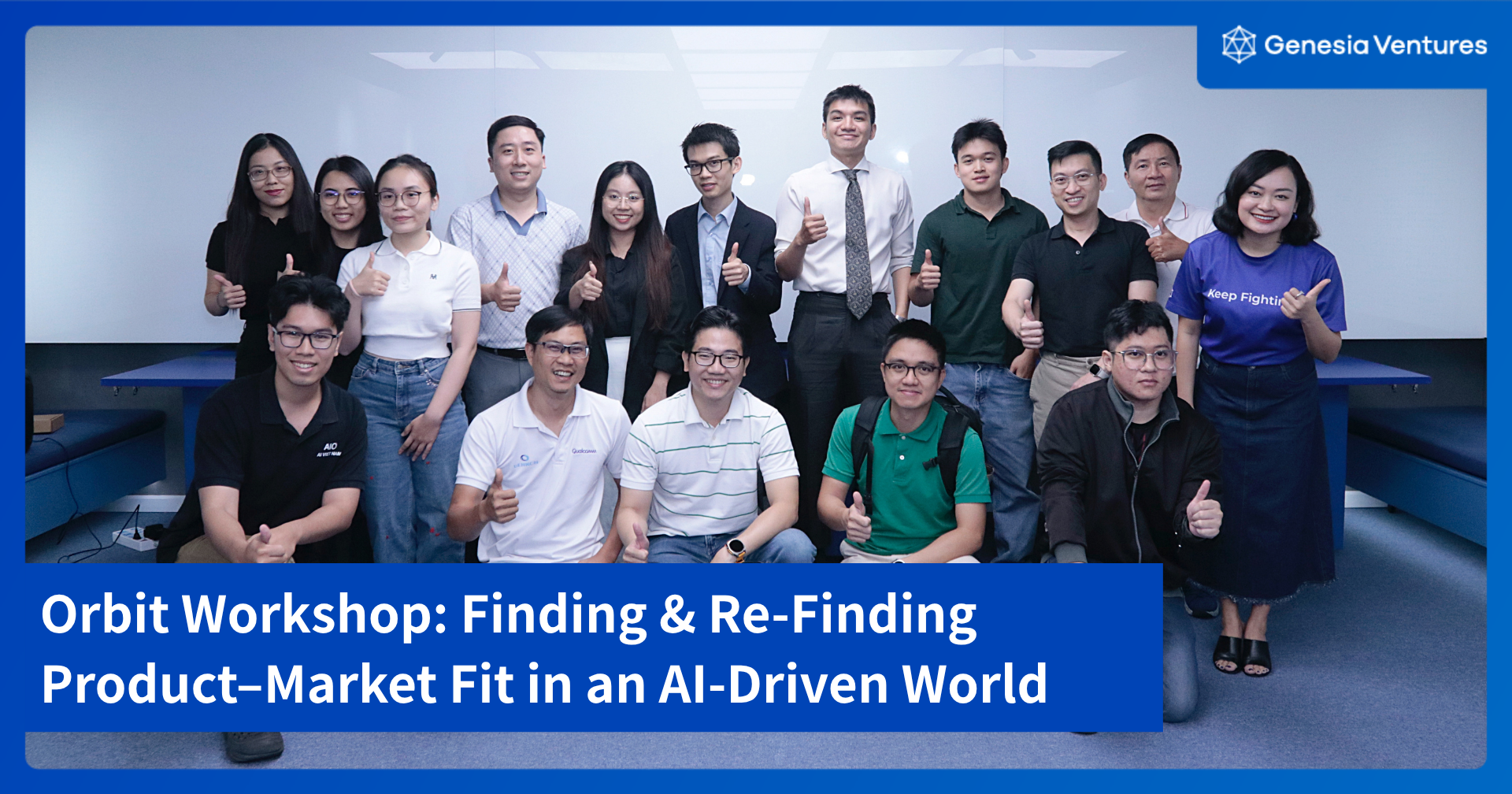
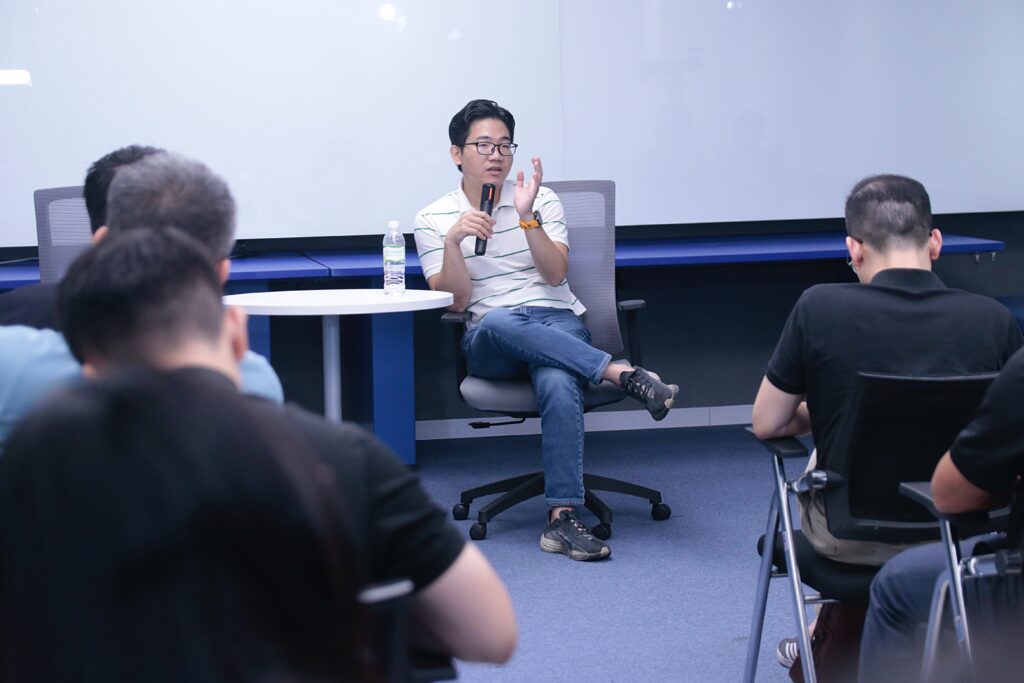
In February 2026, we hosted Orbit Workshop: Finding & Re-Finding Product–Market Fit in an AI-Driven World at Genesia Orbit HCMC.
The session explored a critical question for founders today: Is Product–Market Fit still a milestone — or something that must be continuously defended?
Featuring the Founder & CEO of Fundiin, the discussion highlighted how PMF is evolving in an AI-driven landscape — where faster iteration, rising user expectations, and constant competition make relevance a moving target.
Through real experiences, the session offered practical insights on navigating PMF under constraints, leveraging data and trust as advantages, and identifying when a product is truly ready to scale.
- Moderator: Hoang Thi Kim Dzung, Country Director of Vietnam, Genesia Ventures
- Editor: Vo Thanh Truc, Operation and Community Manager, Genesia Ventures
PMF is widely discussed but often not deeply understood. In the context of AI and cross-market differences, it calls for a more flexible, practical approach.
Zun: Product–Market Fit was selected based on a startup founder’s suggestion from a previous workshop, reflecting strong interest from the community. PMF is a core condition for sustainable growth and scalability, yet the ecosystem still lacks a deep, practical understanding of how to achieve it. As AI reshapes how products are built and distributed, the approach to PMF must evolve—leveraging new technologies while staying relevant to the Vietnamese market. This is why the topic was chosen despite its complexity, especially in the financial sector, where trust and regulatory barriers are significant.
Cuong: PMF is challenging because its meaning and application vary across markets. The insights shared here are based on Fundiin’s experience, so they should be applied flexibly depending on each business model. A key gap in the startup ecosystem is the lack of knowledge sharing among founders, which leads to repeated work on problems that have already been solved, wasting time and resources. Even basic processes, like setting up an overseas entity, are not yet standardized into reusable case studies. Sharing experiences from earlier-stage founders is therefore critical, helping others focus on creating real value instead of reinventing the wheel.

Fundiin at a glance: Building Vietnam’s leading BNPL platform through strong partnerships and scale
Zun: Before we go deeper into the PMF journey, could you share more about Fundiin’s business model, target segments, market, and key partners?
Cuong: Fundiin is the first Buy Now Pay Later startup in Vietnam, launching the model in 2019. After nearly seven years, Fundiin has partnered with around 1,000 merchants (covering ~7,000 stores), served more than 300,000 individual customers, and worked with reputable financial institutions such as CIB Bank and IBM Finance, as well as international partners like Visa. Notably, Fundiin is also the first fintech to integrate with Vietnam’s National Credit Information Center (CIC), reflecting a long journey of building credibility and valuable partnerships.

B2B2C as a cost-efficient demand strategy: leveraging merchants to unlock scalable customer acquisition
Zun: From what you shared earlier, it’s clear Fundiin operates as a platform balancing demand (end users) and supply (capital). Starting with the demand side, who are your target customers and partners in this model?
Cuong: Fundiin’s model involves three key stakeholders: end customers, merchants (sellers), and the financing provider. In the early stage, Fundiin acted as both the platform and the financing provider. Instead of going directly to consumers—which is expensive (e.g., $10–$20 per user for e-wallets)—Fundiin chose a B2B2C approach: acquiring merchants first, who then introduce end users. Since merchants want to close sales, Fundiin provides financing solutions that help convert high-value purchases. This approach significantly reduces customer acquisition cost—down to about 1/10 compared to direct channels—allowing Fundiin to scale efficiently despite limited capital.
Merchant as a risk filter: using transaction context to underwrite customers without credit data
Zun: Beyond lowering CAC, the B2B2C model also adds a filtering layer through merchants. How does Fundiin intentionally select and screen end users to manage risk effectively?
Cuong: In the early days, Fundiin didn’t have access to formal credit data, which is typically essential for lending. To manage this, Fundiin used the purchased product as a proxy for customer quality. For example, buying an English course or a work laptop signals different financial behaviors than other purchases. Based on this, Fundiin selectively partnered with merchants and industries where the product types suggested lower risk. Even without credit bureau data, this approach allowed Fundiin to control risk reasonably well by indirectly filtering customers through merchant and transaction context.
Scaling B2B2C sales: from first-mover advantage to intense competition and shifting unit economics
Zun: B2B2C is efficient, but it requires strong sales to acquire merchants. What were the key challenges and strategies for making this channel effective for PMF?
Cuong: Fundiin operates in a fast-changing, highly competitive market alongside large players like banks and financial institutions. Early on, Fundiin benefited from first-mover advantage and strong value propositions such as cutting approval time from 30 minutes to under 5 minutes, which enabled efficient merchant acquisition, especially in less competitive segments like education and fashion. However, as Fundiin expanded into larger, more competitive sectors, acquisition became harder and competitors quickly adapted. This made unit economics highly dynamic: what worked in one phase could shift significantly in the next, requiring continuous reassessment of unit-level profitability and long-term scalability.

Net transaction margin as the true PMF signal: validating profitability at the unit level before scaling
Zun: As channels saturate and competition increases, PMF becomes a continuous journey. You mentioned net transaction margin as a key metric—why is it the most critical indicator, and how did you arrive at it?
Cuong: Each business model has its own “north star,” and for Fundiin, it is whether a single transaction is profitable. Rather than focusing on top-line metrics like GMV or user growth, Fundiin breaks down unit economics at the transaction level: revenue from financing minus cost of capital, risk (bad debt), and operational costs (e.g. KYC, data checks, approval rates). If one transaction is profitable, scaling to thousands or millions becomes viable. However, this must be validated step by step. Early signals may look good (e.g. strong revenue or low default rates), but they may not hold at scale. Fundiin continuously refines each component—especially cost of capital—accepting short-term inefficiencies while working toward a long-term structure where unit economics are sustainably profitable.

From expensive VC to bank capital: building credibility step-by-step to unlock cheaper funding
Zun: Beyond demand, supply—especially cost of capital—is critical for sustainable PMF. How has Fundiin leveraged VC funding to unlock cheaper capital sources over time?
Cuong: In fintech, bank capital is the ultimate goal because it is the cheapest and most sustainable. However, early-stage startups often lack the credibility to access it. Fundiin used VC funding as a stepping stone to build transaction volume, grow its customer base, and establish a proven track record. This helped build trust with financial institutions. While private debt was explored, it remained expensive and restrictive, so it only served as a short-term bridge. Over time, as Fundiin demonstrated scale and strong risk management, it gradually gained access to local banks—despite a long and rigorous onboarding process (up to 15 months). By 2025, Fundiin had partnered with banks and financial institutions, significantly reducing its cost of capital. This is still an ongoing journey, since improving bargaining power is key to pushing capital costs down further over the long term.

Building a meaningful partnership with a bank takes years of establishing credibility, proving strong risk management, and demonstrating sustainable unit economics — only when everything is mature does the collaboration truly materialize.
Zun: I’ve spoken with many fintech AI startups, and a bank partnership often becomes a critical goal — not only for capital, but also for licenses, customer access, and credibility. As you mentioned, Fundiin’s first bank partnership took a year and required negotiation leverage. During that year, how did you build your negotiation advantages? And for Fundiin, what does a truly “meaningful” bank partnership look like in terms of depth and impact on the company’s development journey?
Cuong:
- In practice, banks approach partnerships much like investment funds: they begin with thorough due diligence. First, they assess market credibility by reviewing public information: the startup’s reputation, the reliability of its products and services, customer responses, and whether the company has sufficient scale.
- If that checks out, they go deeper into financials and operations. Fundiin was fortunate to have a strong market image, especially for not aggressively pushing consumer debt, which earned positive customer feedback. Our merchant network and scale also helped, and partnerships with credible institutions like the Credit Information Center made banks more open.
- The decisive factor, however, is always risk management. Banks look for evidence that you can assess and control risk effectively, and that the numbers support it. Fundiin had to demonstrate solid, sustainable unit economics — and that was critical for banks to commit.
- This is not the result of a single year, but of years of foundation-building: credibility, product quality, and operational data. In lending, product cycles can be long (for example, 12 months), so banks need enough portfolio data — and that takes time.
So, it is a long-term investment. Once everything reaches the right level of maturity, milestones like bank partnerships tend to follow naturally.

Discipline and Controlled Growth
Zun: From following your journey with Fundiin, I understand that building meaningful bank partnerships is a multi-year process. I also remember your “controlled growth strategy” — deliberately prioritizing depth and sustainable metrics over rapid top-line growth. Could you share the context from that period and lessons for founders on balancing conviction with adaptability?
Cuong: Early on, I learned that chasing fast growth without understanding unit economics and risk management can be disastrous. My first startup grew top-line quickly but neglected cash flow and operational risks, nearly leading to failure.
With Fundiin, we slowed down intentionally, focusing on solving the right problems at the right time. Even under investor pressure to grow rapidly, we prioritized long-term sustainability, building credibility, and ensuring solid foundations before scaling. This discipline allowed us to maintain negotiation leverage with banks and secure meaningful partnerships later.
Building Infrastructure and Risk Management
Zun: It seems that these foundations — credibility, risk management systems, and partnerships like the Credit Information Center or Visa — create leverage for future collaborations.
Cuong: Exactly. Startups operate in a dynamic market: regulations and customer verification methods change rapidly. We focus on what we can control and adapt to new market conditions. Building infrastructure takes time, but it is critical for managing risk, maintaining trust with financial partners, and scaling responsibly.

Applying AI to Operations and Risk
Zun: In the current AI era, how has Fundiin applied AI to operations and product development?
Cuong: We focus AI on areas with the highest impact on unit economics:
- Risk assessment — AI structures unstructured customer data, enabling faster and more accurate credit scoring.
- Operational efficiency — AI handles repetitive tasks like customer service, pre-screening applications, and structured decision-making.
We prioritize AI deployment in risk and human-resource-heavy areas first, then move to other operational processes. AI helps reduce costs and improve efficiency while keeping strict controls on data privacy and compliance. KPIs ensure AI adoption — for example, customer support teams must have over 90% of interactions handled by AI when feasible.
Maintaining Focus While Scaling
Zun: Discipline seems consistent across Fundiin’s journey. How does AI affect product-market fit and future expansion?
Cuong: AI accelerates efficiency and reduces costs, but it doesn’t change our strategic focus. We apply AI where it delivers measurable value to our current business, not just for novelty. It supports scaling and faster PMF validation but only works because the foundational systems, risk management, and controlled growth were already in place.
We are careful to integrate AI into the existing business, ensuring that every innovation aligns with our core metrics and long-term strategic goals.
Product Expansion and Strategic Vision
Zun: So, the deliberate foundations, discipline, and AI together allow Fundiin to scale efficiently while maintaining PMF and preparing to expand into new financial products.
Cuong: Exactly. Fundiin has built a strong foundation over nearly seven years — disciplined growth, risk management, and infrastructure. This enables us to explore adjacent financial products on our existing customer base. The path is slow but intentional, focusing on impact and sustainable growth rather than short-term gains.
Conclusion
Product-Market Fit (PMF) remains a critical yet often misunderstood milestone for startups. As Cường Nguyễn noted, achieving sustainable PMF goes far beyond chasing rapid top-line growth. It requires years of disciplined execution, deliberate infrastructure building, and rigorous risk management. In today’s dynamic landscape — shaped by AI and cross-market differences — startups must pair careful prioritization with adaptability and data-driven decision-making. AI can accelerate efficiency and improve decisions, but only when built on a resilient, well-structured business. Ultimately, PMF is not a single milestone, but an ongoing process of validating product, market, and operational readiness while staying flexible as conditions change.

Note: This report reflects information as of March 30, 2025.