“Trust Above All”: How the Wareflex Founder Wins in Local B2B Markets
As Genesia Ventures’ Vietnam team, we regularly host events to share startup knowledge and build relationships with our portfolio companies and aspiring founders in Vietnam—reflecting our cross-border approach to both investment and hands-on support.
On August 22, 2025, we hosted KOREA – VIETNAM STARTUP CONNECT 2025, in collaboration with Kibo, a Singapore-based VC investing in climate tech and social impact across Southeast Asia, and Investy Global, which operates education and international exchange programs between Korea and Vietnam.
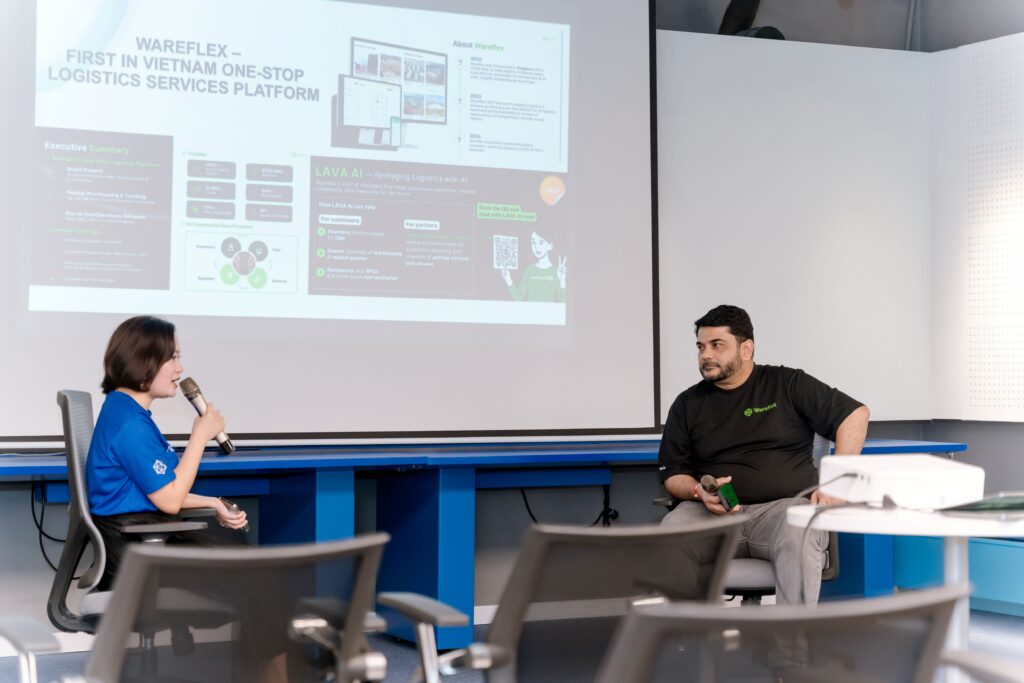
This report is a digest of the fireside chat “Winning in Vietnam’s B2B Market”, moderated by Genesia Ventures’ Country Director of Vietnam, Hoàng Thị Kim Dzung (hereafter, Zun).
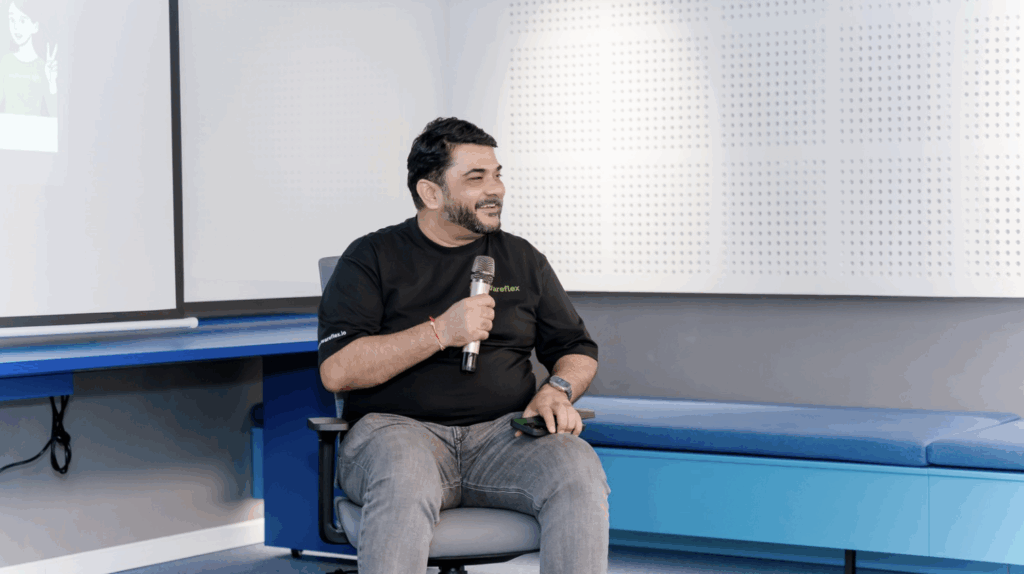
Our theme: trust-building. Cross-border expansion holds huge potential, but founders often face cultural and business-practice barriers if they don’t understand local norms. We spoke with Rajnish Sharma (hereafter, Rajnish), Founder & CEO of Wareflex, an on-demand warehouse platform in Vietnam, who has lived in the country for 12 years.
- Moderator: Hoàng Thị Kim Dzung, Country Director of Vietnam, Genesia Ventures
- Editor: Vo Thanh Truc, Operation and Community Manager, Genesia Ventures
The Fundamentals of Trust: Capital Signaling, Strategic Customers, and a Problem-Solver Mindset
Zun: Today’s theme is trust-building. What have you done to earn trust from customers as you’ve grown the business?
Rajnish: Trust takes time—there are no magic shortcuts. We began by understanding customers’ concerns and addressing them directly.
First, credibility as a startup. In Vietnam, a company’s charter capital is listed on its business license and is seen as a signal of scale. When we were questioned about our relatively small charter capital, we explained that it was intentional—we were focusing on acquiring enterprise customers first. Once those large accounts came on board, a domino effect followed: others thought, “If they’re using Wareflex, we should try it too.”
Second, sales style. Even when we needed deals badly, we avoided hard selling. Instead, we focused on understanding the customer’s problems. In many B2B industries, companies don’t even realize they have a problem; they assume “that’s just how the industry works.” There is always room for improvement. We leaned into solution selling. We positioned ourselves as problem solvers and told our sales team: “Don’t sell the company—sell the founder and the vision.” Our message was, “We share your pain, and we’re serious about fixing it.” Those small moments of empathy built trust. One client led to two referrals, two to four, and so on.
The Power of Small Workshops: Strengthening Relationships and Informing Product
Zun: I’ve worked with Wareflex since the seed stage. I remember a small workshop about three years ago with logistics partners and business leaders—people likely to care about your solution. Some attendees wondered why you ran so many small workshops. I felt it was the right approach because business in Vietnam is all about network and trust. From my perspective, the format was valuable for gathering needs and feeding them into product. Did it help with early relationship-building—or was it just a one-off effect?
Rajnish: The goal was to meet potential customers in person—what I call face selling. Instead of relying on calls or messages, we used in-person meetings as a trust-building tactic. We also brought a UX designer to collect as much user feedback as possible. Much of our product development actually starts from activities like these. Sometimes we even discovered unexpected segments: for example, someone would say, “I own a warehouse in Area A but have demand from customers in Area B—can we partner?” Workshops led to long-term relationships and many referrals.
Business the Vietnamese Way: Cultural Sensitivity and Patience Decide Outcomes
Zun: Beyond language, what cultural gaps did you face doing business as an Indian founder in Vietnam? Many startups eyeing the market will be curious.
Rajnish: I had already lived in Vietnam for 12 years before starting Wareflex, so I was familiar with cultural norms, food culture, manners, and business customs. The most important thing across hiring, partnerships, and customer acquisition is cultural sensitivity.
For instance, it’s common for decisions to be made through informal conversations or meetings on Zalo (Vietnam’s equivalent of WeChat). Also, in my experience, there are roughly two types of companies: a minority who are excited by foreign-led innovation, and a majority who inherently trust local people and firms more. We once hired a salesperson trained in Western sales methods; the approach didn’t land. I messaged the client, “Let’s grab a beer!”—and we closed a better deal.
It’s hard to turn this into a neat framework, but one truth stands out: patience. Pushing for “Please decide by tomorrow” can be seen as rude. It’s better to convey empathy—“We understand your challenges and complexity. We’re here to support you.” Even saying “Trust me” can be surprisingly powerful. People do come back.
We work with large companies like Heineken and Pepsi. There were times we handled urgent requests diligently, only to hear, “My boss didn’t approve—sorry for wasting your time.” I would say, “It’s okay. You did your best, and I understand not every decision is yours to make.” They were surprised—and a few months later, we signed a different deal. Aggression doesn’t build partnerships.
Balancing Trust-Building and Health: Using “Drinking Culture” Productively
Zun: Even if you don’t speak Vietnamese, a few phrases help in business: “I understand,” “I empathize,” and “It’s okay.” As you said, empathy and patience bring customers back. Relationships matter deeply here—“drinking culture” included. That’s true in venture as well as B2B sales. Over drinks, people open up, share issues, and offer insights. You often meet clients this way—any tips for keeping it scalable and healthy?
Rajnish: I gained 22 kilograms after starting Wareflex—because of the drinks! I used to be slim, but building trust through social gatherings changed that. I’m more careful now, but if I believe a meeting will deliver results, I’ll still go without hesitation.
Takeaways
Rajnish’s experience highlights a central truth for B2B in Vietnam: trust is everything. Enterprise logos help, but so do face selling, cultural sensitivity, and patience. Small workshops that surface real needs and feed product development can compound over time. And in many cases, empathy—“I understand,” “It’s okay”—and even a casual beer do more to close deals than a forceful pitch.
In Vietnam, long-term success depends on playing the long game of trust, beyond short-term wins. That posture expands future possibilities and sets the stage for sustainable growth.
Note: This report reflects information as of September 23, 2025.