Special Edition: What Lies Beyond “Asia Origin”? — The Next Decade of Building New Industries from Asia | Featuring Soichi Tajima and Takahiro Suzuki, General Partners at Genesia Ventures | Ayo! by Genesia
Ayo! by Genesia is a podcast brought to you by Genesia Ventures.
“Ayo!” means “Come on!” or “Let’s go!” in Indonesian. Every other Tuesday morning, we share the real stories behind startup challenges.
This is a special edition🌟
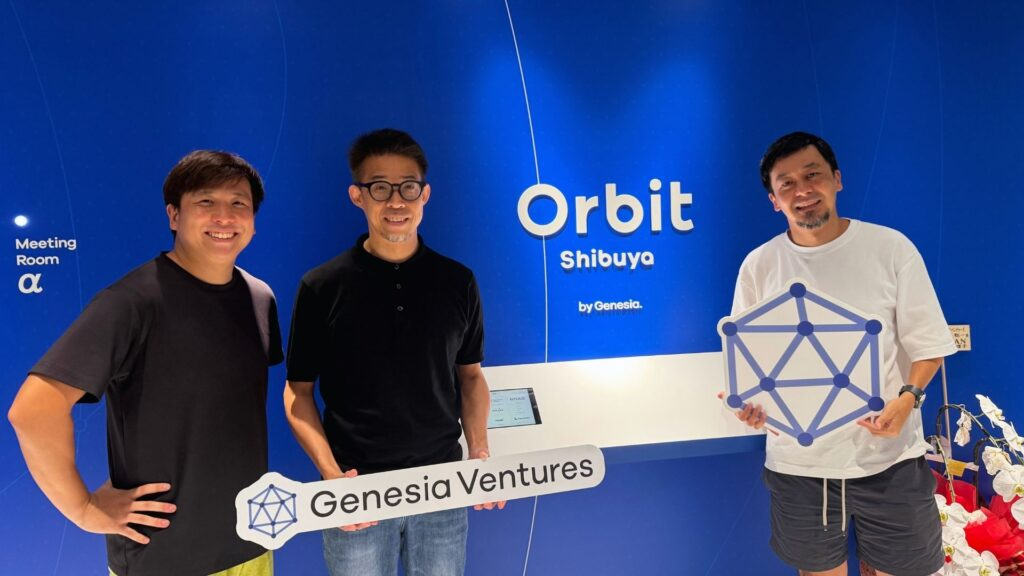
On August 31, 2026, Genesia Ventures celebrated its 10th anniversary. In this episode, General Partners Soichi Tajima and Takahiro “Taka” Suzuki join us to reflect on the firm’s journey so far and discuss what lies ahead. The conversation is moderated by Koki Mizutani of Genesia Ventures.
Contents
- The relationship between founders and seed VCs is a decade-long partnership — and that is why it must be one of equals
- Fund IV and the growing importance of a proven track record: How perceptions of Genesia’s presence across Asia have changed
- Resilience matters most during a downturn: The end of excess liquidity and changes in global markets
- The fundamentals of investing remain unchanged in the AI era: Trusting your instincts about who is building the business
- More options for both founders and investors: How we view the changes shaping the next decade
- Taking on the next challenge with our new investment concept, “Asia Origin”
The relationship between founders and seed VCs is a decade-long partnership — and that is why it must be one of equals
Mizutani: Founded in 2016, Genesia Ventures celebrated its 10th anniversary this August!
Over the past decade, we have launched four funds, grown our total assets under management to approximately ¥45 billion (approximately $300 million), and invested in a cumulative total of 208 companies. Every startup has its own story. Could each of you tell us about a particularly memorable encounter with a founder?
Tajima: For me, it would have to be Ogawa from Timee. I received a call from Okitsu, formerly of Mizuho Bank, who said, “There’s a founder I’d like you to meet.” We met around the spring of 2018.
Ogawa was still a student at the time, but I was impressed by how confidently he spoke to me. His attitude was essentially, “This is the business I want to build. What do you think, Tajima?” Despite being a student, he already had a strong entrepreneurial and managerial presence.
Mizutani: How about you, Taka?
Taka: Every encounter has stayed with me in its own way, but if I had to name two, the first would be Igarashi of HOKUTO, a clinical support app for physicians.
I am not particularly fond of crowds, so I rarely attend large events. But on one of the few occasions when I went to B Dash Camp (a major tech conference in Japan), Igarashi approached me with what was essentially an elevator pitch: “We’re planning to pivot and build this kind of business.”
What surprised me was how thoroughly he had researched Docquity, one of Genesia’s portfolio companies offering a similar healthcare service in Southeast Asia. At the time, Docquity had not even reached Series B and was by no means a well-known company. After we invested, I continued to see Igarashi’s extraordinary capacity for action: gathering firsthand information, refining the product, and bringing talented people into the team.
The second would be Sakai of MOVUS Technologies, which operates a mobility platform in Indonesia. He found a mutual acquaintance and approached me through that connection. In our first meeting, rather than focusing solely on the business, he asked in-depth questions about who I was and even went back through years of my posts on X.
I think he had prepared so thoroughly because he genuinely wanted Genesia to join the company’s journey. His approach was inspiring and made me think, “This is the kind of founder who can truly bring people on board.”
Mizutani: It is interesting that both were confident young founders.
Taka: We invest at the seed stage, so our partnerships are measured in decades. In that kind of relationship, it is extremely important that both parties remain equals.
Investors are not somehow superior. Founders need to decide whom they want to bring on board as partners, and we try to engage with them with that understanding.
Mizutani: Tajima, what kind of attitude would you like founders to bring when communicating with you?
Tajima: Rather than comparing themselves with other companies or following someone else’s path, I believe successful founders are those who can continue to lead.
People start companies to realize something they genuinely want to create. I want them to remain leaders, and I want to be the kind of investor who can support the decisions they make as leaders.
Fund IV and the growing importance of a proven track record: How perceptions of Genesia’s presence across Asia have changed
Mizutani: Since announcing the launch of Fund IV, we have received fundraising inquiries from many founders. People often tell us that our fundraising appears to be going smoothly, but looking back over the past decade, what events stand out to you?
Tajima: With Funds I through III, we were able to raise capital thanks to LPs who identified with Genesia’s vision and our concept of an “industry creation platform” — in other words, the world we want to build together with founders.
Fund IV was somewhat different. This time, our actual results — our track record — were scrutinized much more closely. Investments in companies such as HRBrain and Timee, which have become fund returners in our portfolio, helped bring us to where we are today.
Mizutani: The composition of our LPs also changed significantly with Fund IV. Funds I through III included many corporations and corporate venture capital firms, whereas Fund IV is centered primarily on institutional investors. That required us to raise the standard of discipline expected of the fund.
Were there any particularly memorable questions or comments from LPs during the Fund IV fundraising process?
Taka: Up through Fund III, institutional investors often told us that they wanted us to focus exclusively on Japan. They determine their allocations by region, so they tended to be skeptical of our approach of investing across multiple countries through a single fund.
During the latest fundraising process, however, our presence across Asia was regarded as a significant strength. That change was particularly striking.
In addition to changes in the Japanese market, several of our overseas portfolio companies have produced strong results. I believe those results have led investors to evaluate our strategy differently.
Mizutani: What about you, Tajima?
Tajima: The question of how to create a higher degree of predictability in seed-stage investing is extremely difficult. At the same time, it is something we must address seriously as a seed VC.
Within our team, we have systematized certain frameworks and models. I believe those capabilities were part of what investors valued.
Resilience matters most during a downturn: The end of excess liquidity and changes in global markets
Mizutani: Since I joined Genesia in 2018, we have experienced many major global events, including the COVID-19 pandemic and the collapse of the startup bubble following the end of excess liquidity. Which events had the greatest impact on our activities in Southeast and South Asia?
Taka: By far the biggest was the collapse of the startup bubble caused by the end of excess liquidity in late 2022. It was a global event, and in some respects its effects are still continuing.
In the United States, startup investment fell sharply between 2022 and 2023, before rising again. But if you look at the composition of that recovery, it is largely driven by AI companies, with capital concentrated in the foundational LLM layer. Investment outside that sector remains constrained.
Southeast Asia and India have also been experiencing a prolonged winter since 2023. India, however, is beginning to show signs of recovery. Startups founded in the early 2010s are finally going public after 15 years, with valuations ranging from hundreds of millions to billions of dollars. These exits are creating positive momentum.
In Southeast Asia as well, later-stage investors remain interested in companies that are growing and have sound unit economics. So I do not think there is a need to be excessively pessimistic.
Japan began to undergo an adjustment following changes to the Tokyo Stock Exchange’s continued-listing criteria, about three years later than global markets. We often hear that Japan’s fundraising environment has become significantly more difficult, but compared with Southeast Asia and India, it remains relatively favorable.
During the period of excess liquidity, startup valuations often expanded far beyond their underlying fundamentals. Today, however, the rules of the game favor teams with strong management and execution capabilities.
Many great startups are born after bubbles burst, at precisely the moment when everyone says it is a bad time to start a company. When markets are pessimistic, there is less competition — and potentially more opportunity.
Mizutani: Around 2020, unicorns were emerging one after another in Southeast Asia. At the time, Genesia’s portfolio companies were not necessarily announcing similarly spectacular fundraising rounds. During that period of excess liquidity, how did you communicate with founders?
Taka: I have been in the industry for approximately 15 years, including my time at my previous firm. I have seen companies succeed by riding a bubble, but I have also seen many startups deteriorate because of it.
When companies raise more capital than they need, spending can become careless and cracks can begin to appear in the organization. Then, when the market turns and they can no longer raise capital, the cycle reverses.
Based on those experiences, I consistently told founders that they might be able to win without joining the fundraising race.
Mizutani: We recently hosted an event featuring founders from our Southeast Asian and Indian portfolio. I was struck by how serious, disciplined, and grounded they were.
Taka: One example is a logistics startup in our Indonesian portfolio. Its competitors raised tens of millions of dollars) — one even approached unicorn status — while our portfolio company raised less $10 million.
Despite that, most of its competitors disappeared during the market correction, while our portfolio company is now on track to generate profits in the millions of dollars.
This shows that a company can grow regardless of how much capital it raises, as long as it remains disciplined and continues to solve customers’ problems deeply. Many of our founders are serious entrepreneurs who stay committed to the fundamentals of their businesses and continue along the path they believe in.
The fundamentals of investing remain unchanged in the AI era: Trusting your instincts about who is building the business
Mizutani: AI has evolved rapidly. VCs can now conduct market research and due diligence more efficiently, while founders are using AI to prepare potential questions and answers before meeting investors.
As AI begins to replace some of these more operational activities, have you noticed any changes in the way investment decisions are made?
Tajima: Honestly, not very much has changed. I have been a venture capitalist for nearly 20 years, and what has always mattered most is the business domain — what is being built — and the founder — who is building it.
At the seed stage, the strategy presented in the initial pitch deck will change in most cases. That is why I do not place too much emphasis on exactly how the founder plans to execute the original strategy.
What matters is whether the founder can form hypotheses, move forward, incorporate what they learn along the way, and continue adapting those hypotheses.
Deep tech is somewhat different. In that area, I place more emphasis on how the business will be built. When new technologies emerge, they can alter the basic assumptions underlying what was previously considered the best approach. The path chosen to reach the summit becomes extremely important.
Nevertheless, the fundamentals of our investment decisions — what is being built and who is building it — remain unchanged.
Mizutani: How do you prepare yourself to make investment decisions quickly? Is there a particular way that you cultivate what might be called a “prepared mind”?
Tajima: I consciously ask myself, “What would I do?” as I go about my daily life or read articles and the news.
I have developed a habit of making myself the subject of the question: “How would I approach this?” or “How would I run this business?” Even when I go to a restaurant, I naturally find myself thinking about how I would change its operations.
When you view the world that way, all kinds of business opportunities begin to emerge. During conversations with founders, I can draw on the ideas and perspectives I have accumulated in those mental drawers.
Mizutani: Taka, how do you think about investment decisions?
Taka: AI has dramatically increased the speed and breadth of research, but I agree that the essence of decision-making has not changed at all. Above all, who is building the business remains the most important factor.
There is a recurring debate about whether founders need a defining personal experience that motivates them. I do not think it is a simple matter of whether it is necessary or unnecessary, but personally, I am drawn to founders who have one.
When someone continues taking on a challenge for 10 or 20 years, there will inevitably be periods when growth stalls. At those moments, founders with a compelling reason for starting the company — why they chose this particular field and what kind of world they want to create — seem more capable of persevering.
Internally, we often talk about “the size of a person’s tank of desire and the color of the water that fills it.”
The size of the tank refers to the scale of a person’s ambition — what it takes for them to feel fulfilled. The color of the water represents the balance between desires directed toward oneself and those directed toward society or other people.
Financial desires, for example, can be satisfied relatively quickly. People whose motivations are directed too heavily toward themselves may also be more likely to give up.
Founders who accomplish something significant tend to derive fulfillment from creating a major impact on society or other people. Through meetings and relationship-building, we get to know each other and determine whether our motivations and values are compatible.
Mizutani: As part of the decision-making process, do you also go out for meals with founders?
Taka: Yes. For me, it is a way to confirm whether my initial instincts about the founder were correct. When my immediate reaction to someone is positive, we usually end up investing.
It is important not to reverse that order. If you become too captivated by the business domain first, you may misjudge the founder’s ability to drive the company forward.
Intuition about a market is not enough. Intuition about a person, however, is extremely important.
Tajima: I agree completely. You cannot assess a business domain based on intuition alone, but when it comes to founders, you should trust your instincts. That has certainly been true in my experience.
More options for both founders and investors: How we view the changes shaping the next decade
Mizutani: Looking ahead to the next decade of investing, how do you view the changes currently taking place in the market?
Taka: One principle that matters to me is not being swept up in buzzwords.
Ultimately, technological progress changes the “how.” It changes what we can do and how we can do it, but the fundamental importance of solving customers’ problems deeply and continuously remains the same.
Of course, we need to consider how technological advances can remove bottlenecks and address problems that could not previously be solved. But the answer still lies in continuing to solve real customer problems.
That is why I believe the value of people who are willing to do the unglamorous, hands-on work is actually increasing.
Tajima: I believe the revision of the Tokyo Stock Exchange’s Continued Listing Criteria will have a wide range of effects.
Historically, Japanese VCs have treated IPOs as the primary exit scenario, with M&A positioned more as a secondary option. I believe we need to fundamentally change that thinking.
M&A should become the primary scenario, while companies with the potential to become truly large businesses should pursue IPOs.
In the United States, only startups capable of becoming very large ultimately go public. Others become part of operating companies through M&A. Creating greater mobility — allowing founders to exit through M&A and then move on to their next challenge — is also important for strengthening Japan’s industrial competitiveness.
Taka: In markets outside Japan, an IPO is not an option unless a company reaches considerable scale. I view the tightening of listing standards positively because it gives Japan an opportunity to move closer to the global norms.
Rather than regarding the change pessimistically, founders, VCs, and everyone else in the ecosystem should think about how to turn it into a positive development.
There will undoubtedly be more options for founders and investors, including M&A and secondary funds. It will be interesting to see companies take a more creative approach to their capital strategies.
Taking on the next challenge with our new investment concept, “Asia Origin”
Mizutani: As a seed VC, what roles do you believe founders will continue to expect from us?
Tajima: Founders will always understand their businesses far better than we do. But unless they are serial entrepreneurs, recruitment and organizational development are likely to be completely new challenges. Those are areas where VCs can deliver meaningful value.
Another area is PR and branding. Some companies are doing genuinely excellent work, but their value is discounted because the way they communicate it has not been properly designed. That is a tremendous waste.
We also want to strengthen our ability to connect founders with networks they could not build independently, such as key decision-makers at major corporations.
Taka: As the expectation grows that companies should reach significant scale before going public, it will become increasingly important to help them move to an entirely different order of magnitude.
Some businesses can become large enough within a single market, while others will need to enter regional or global markets. Genesia has offices in Japan, Vietnam, Indonesia, and India, and we are steadily building relationships with local conglomerates.
We want to help founders — including those building deep-tech companies in Japan — partner with these conglomerates and expand across borders.
To mark our 10th anniversary, we introduced a new investment concept called Asia Origin. It expresses our ambition to remain the first partner of founders building the next generation of industries from Asia.
The name “Genesia” itself is a combination of “Genesis” and “Asia,” reflecting an aspiration that has been with us since the firm was founded.
To build larger businesses, it will be critical to incorporate Asia’s growing emerging markets and bring people across those markets onto the same team. There are sectors in which founders across Asia have a distinctive opportunity to win, and I would like to see more of them take on regional and global markets from day one.
In Japan, Sony and Toyota were once able to build global businesses from this region. There is no reason our generation cannot do the same.
Our challenge is to make Genesia’s network across four Asian countries function as a platform that founders can use as leverage.
Tajima: Southeast Asia and India are particularly exciting in the AI era because they are not markets suffering from a lack of demand — they are markets facing supply constraints.
There are patients, but not enough doctors. There are people who want to learn, but not enough teachers. AI can unlock the supply side in these markets.
While the internet revolution unlocked demand, AI can expand supply itself. The winners of the generative AI era will not only be the companies that build the best AI models. They may also be the companies that use AI to unlock the most significant supply constraints.
I strongly believe that those companies have the potential to emerge from Asia.
Mizutani: We see enormous potential at the intersection of Asia and AI. If you are interested in taking on that challenge, please feel free to reach out to us.
To close, could each of you share a few words on Genesia’s 10th anniversary?
Taka: We have reached this milestone thanks to the many founders we work with and the LPs who have invested in us. We are sincerely grateful.
Precisely because this is an era of rapid change, it is also a time when we can create something much larger. Our vision of building an “industry creation platform” is still a work in progress.
We will continue taking on challenges of our own and working to create new value and new industries.
Tajima: Looking back over the past decade, I feel nothing but gratitude.
I am grateful to every member of our team who joined when we had no track record and has worked alongside us; to the LPs who believed in us and entrusted us with their capital when we had nothing; and, above all, to the founders who chose us as their first shareholder.
Venture capital is a business that cannot begin unless founders choose you.
Everything Genesia has built over the past decade has been the result of opportunities given to us by all of these people.
We will continue taking on even greater challenges, and we hope you will continue to support us. Thank you.
Mizutani: Thank you for your continued support of Genesia Ventures! Ayo!!!!
Tajima and Taka: Ayo!!!
Please also visit the special website we launched to commemorate our 10th anniversary: https://www.genesiaventures.com/asia-origin/